|
Slugs & Snails |
 |
|
Scientific Name |
Ditylenchus, Aphelencloides species |
Common Name |
Slugs & Snails |
Phylum, Class |
Mollusca, Gastropod |
|
Physical Description |
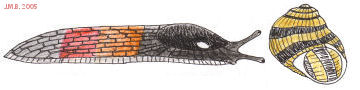
Soft bodied unsegmented gastropod mollusks, moving on one foot. Snails have hard shells, into which the body retreats. |
Habitat, Distribution |
Soil, under stones, in detritus, under pots in day, feeding at night. Found in fields, hedges, woods, gardens. Common in calcareous soils. Most soils with organic content will support large numbers. Widely distributed in Europe. |
Life Cycle |
Individual slugs and snails are hermaphrodite, sometimes crossmating, where the courtship is elaborate. 10-50 spherical opaque or transparent eggs are laid in cavities or the soil. Each may lay 500 eggs in a lifetime. Eggs hatch a month later. If laid in spring will develop in year. If laid in Autumn, will lie dormant through winter. Young slugs are miniature versions of the adult, and feed for a year before being able to reproduce. |
|
Method Of Attack |
Rasping tongue (radula) chops materials. Feeds at night. |
|
Symptoms & Damage Caused |
New irregular holes in roots, bulbs, corms, tubers, stems, leaves, flowers and buds, fruits, in the morning. Slime trail over floors and plants. Mainly in warm periods of spring and autumn. In greenhouses this occurs all year round. Most damage above ground. Also may feed on dead matter, decaying leaves. |
|
Plants Affected |
All plants. Especially Potatoes, Sweet pea, Iris, Artichoke, Brassica, Anenomes, Dahlias, Delphinium, Helenium, Hosta, Hyacinth, Lilium, Narcissus, Primula, Tulipa, Viola. |
|
Cultural Control |
Cultivate soil frequently to expose eggs. Limit the amount of manure used in compost and mulch. Maintain hygiene. Trap by laying lettuce, cabbage, bran, beer and other organic materials in a small pit or bowl in the ground in warm humid evenings. |
|
Cultural Control |
Poisons: Metalehyde, Methiocarb slug pellets. Effective for 3 days.1kg = 1ha. Spread pellets, ash, soot around seed and cutting trays. |
|
Stage Vulnerable |
Eggs in soil. Adults hibernating feeding resting. |
Information Collated by James M. Burton as part of H.N.D. Course
at Pencoed Agricultural College.
Chemical Information Correct
as of 06:06:97. Always read and follow the instruction when using
insecticides.