|
Mites |
|
|
|
Common Name |
Mites |
Phylum, Class |
Acarina, Tetranychidane |
|
Physical Description |
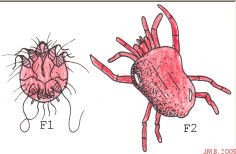
Four pairs of jointed legs in the nymphal and adult stages. Lacks any clear division in the body. Generally very small 0.5-2 mm long. |
Distribution, Habitat |
Abundant in most habitats. |
Life Cycle |
Reproduction is sexual, develops from Egg - Larva - Nymph - Adult. Males are rare or absent. Reproduction also parthenogenic. Female mites live for a month, and lay 100 eggs, on underside of leaf. Eggs hatch 3-30 days depending on temperature. Six legged larvae feed for a few days before moulting and transforming into nymphs. This stage feeds for a time before moulting and transforming into a deutonymph, which then develops into an adult. Egg to adult takes 8 days at 26.5 degrees. But will take 2 months at 10C. Breeding continues through Spring Summer Autumn. Stops laying in Winter, when they hibernate in cracks and bark. Remain dormant until spring. |
|
Method Of Attack |
Many are scavengers of the soil, feeding on organic matter in the soil. Some prey on other insects, Others feed on healthy tissues. |
|
Damage Caused |
Discoloration, wilting, death. Vast webbing seen in severe cases. |
|
Cultural Control |
Spray susceptible plants with mist of fine water twice a day. Humidity depresses activity. Sick plants worst affected, high temperatures and over crowding makes worse. Maintain good hygiene. Discard old plants. In severe attacks. Burn affected plants, sterilize all equipment. Avoid using chemicals. |
|
Biological Control |
Phytoseiulus persimilis is a predator introduced in early September, after planting, before hibernation. A second introducton in Spring will be usefull. Therodiplosis persicae is also usefull midge preadator. All stages are vulnerable. |
Information Collated by James M. Burton as part of H.N.D. Course at Pencoed Agricultural College.
Chemical Information Correct as of 06:06:97. Always read and follow the instruction when using insecticides.