|
Caterpillars |
|
Common Name |
Caterpillars |
Phylum |
Lepidoptera |
|
Physical Description |
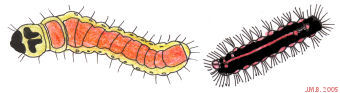
Larvae of moths and butterflies, have similar structures. Head well developed, with pair of strong mandibles, used to chew plant tissues. Thorax three segmented, with pair of jointed legs on each segment. Abdomen has ten segments with 5 pairs of fleshy non jointed legs. Size 5 - 100 mm Colour varies. |
Distribution, Habitat |
50 species found in garden and greenhouse plants. |
Life Cycle |
Reproduction sexual. 100 eggs laid near or on host plant, in batches. Hatch in a few weeks, and feed for 1 to 2 months. They then pupate on plants, soil and debris. Adults emerge in a few weeks. |
|
Method Of Attack |
Caterpillars feed on all parts of plant, large chunks taken from leaves, silk often seen. |
|
Cultural Control |
Pick off and crush. Overwintering prevented by good hygiene, or correct pruning. |
|
Chemical Control |
In large infestations contact insecticide is used as dust or spray. Derris, Biosmethrin, Resmethrin, Malathion. |
|
Biological Control |
Microbial insecticide Bacillus thuringiensis. Chemicals must not be used here. |
Information Collated by James M. Burton as part of H.N.D. Course at Pencoed Agricultural College.
Chemical Information Correct as of 06:06:97. Always read and follow the instruction when using insecticides.